 DRIVINGO
Road signs
What Do Irish Road Signs Mean?
Published
What do Irish road signs mean?
Irish road signs fall into three families, and you can tell them apart by shape and colour before you can read a word. Yellow diamonds warn you about a hazard ahead. Red-bordered signs and blue circles are regulatory: they tell you what you must or must not do. Information signs give directions, and their colour tells you the type of road: blue for motorways, green for national roads and white for regional and local roads.
Learn the shapes and colours and you've done most of the work. The symbols mostly explain themselves; the family tells you how seriously to take them.
Warning signs: yellow diamonds
If it's yellow with a black border and a black symbol, it's a warning. Almost all of them are diamond-shaped (a few are rectangles), and they sit at the side of the road rather than being painted on it. A warning sign doesn't order you to do anything specific; it tells you something is coming that needs extra care, so you slow down and get ready in good time.
Some you'll see everywhere:
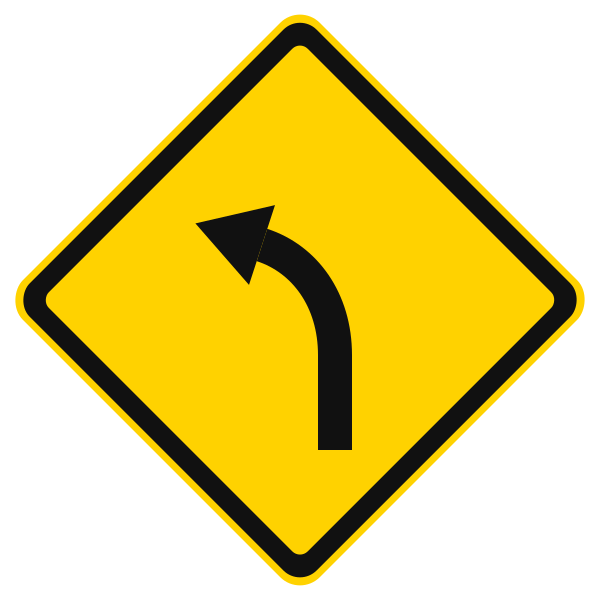
Dangerous bend ahead. The arrow shows which way the road goes. Ease off before the bend, not halfway around it.
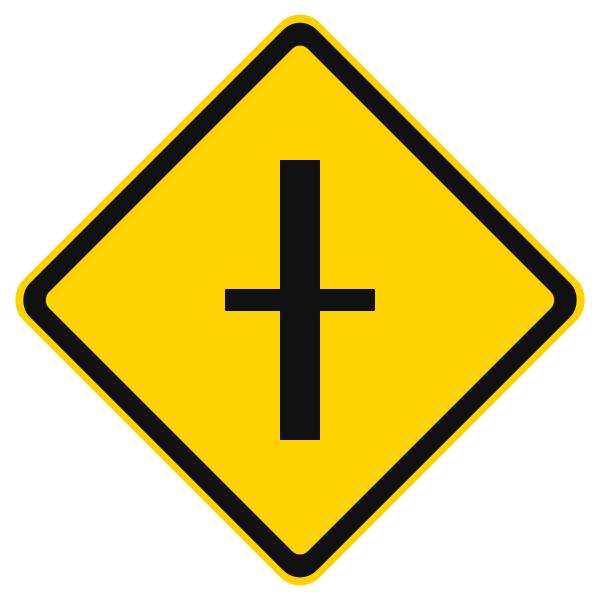
Crossroads ahead. Traffic could come from either side. Slow down, look both ways and watch for a Stop or Yield sign at the junction itself.
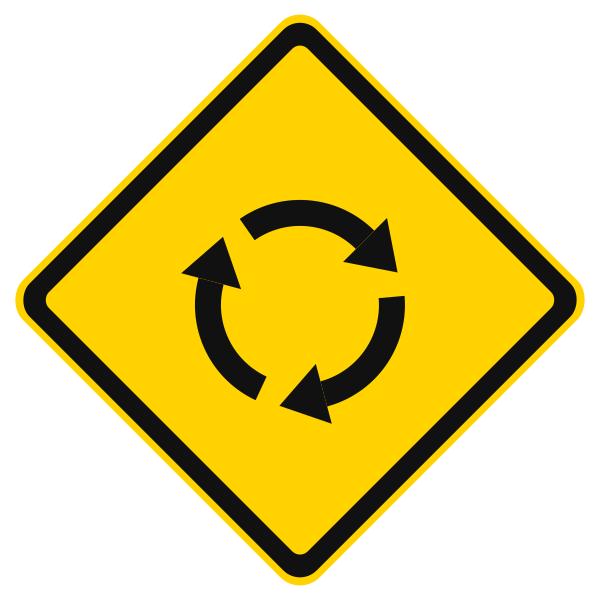
Roundabout ahead. Time to think about which lane you need. Our roundabout rules guide explains the clock method the RSA teaches.
The very Irish ones
Some warning signs are a reminder that the Irish countryside is very much still in use.
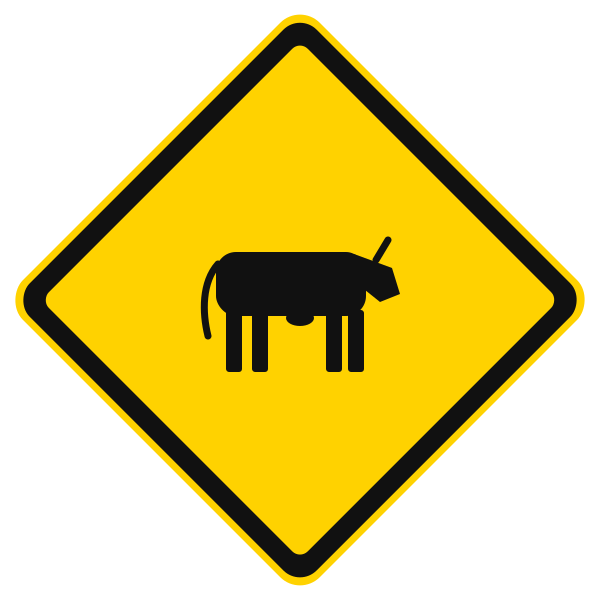
Cattle and farm animals. Expect animals on the road, or a farmer moving a herd across it. Slow right down and be ready to stop. Revving at a cow has never once worked.
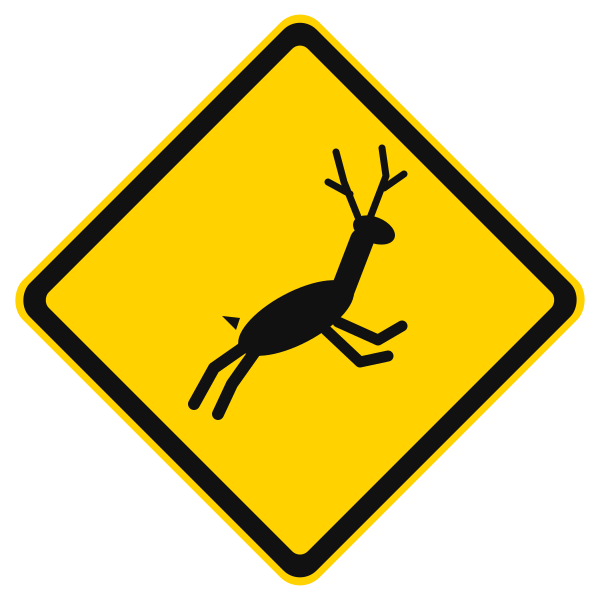
Deer or wild animals. Common near forests and parkland, especially at dawn and dusk. A deer that crosses is often followed by a second one.
Roadworks signs are orange
Roadworks get their own set of warning signs. They're the same idea, a diamond or rectangle with a black border, but orange instead of yellow. When you see orange, slow down and expect narrowed lanes, temporary lights or workers close to traffic.
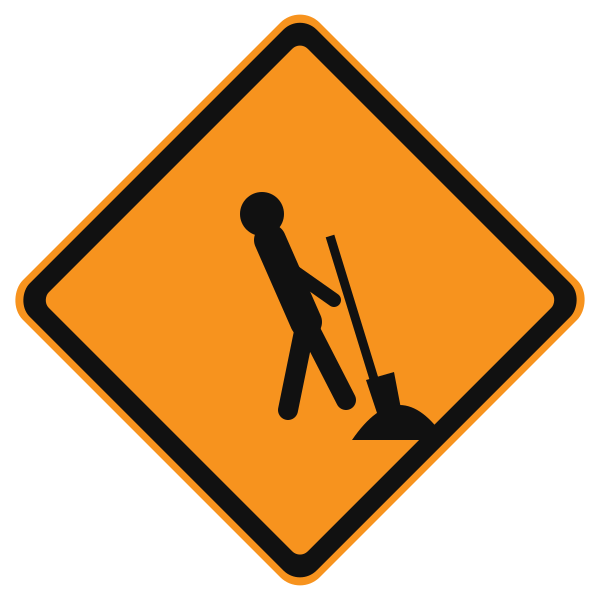
Regulatory signs: red borders and blue circles
Regulatory signs carry the force of law, so ignoring one is an offence, not just bad driving. They come in two styles:
- White background, red border, with black letters, symbols or numbers. These mostly tell you what you can't do, or set a limit.
- Blue background with white symbols. These tell you what you must do, such as which way to go.
Stop and Yield
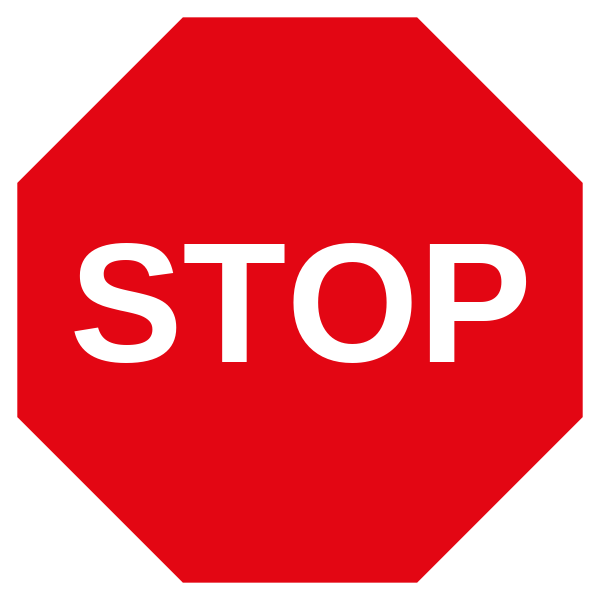
The Stop sign is an eight-sided red sign with a white edge, and it's the only regulatory sign with that shape, so you'll recognise it even from behind a hedge. At a Stop sign you must come to a complete stop before going onto the major road, however quiet it looks. Rolling through at walking pace isn't stopping.
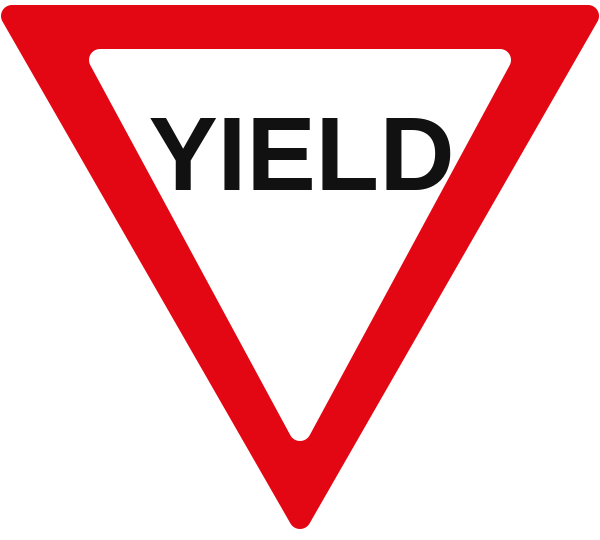
The Yield sign is a red-bordered triangle pointing down. It means give way to traffic on the major road and only go when it's safe. Some versions carry extra words, such as "Géill Slí", which is Irish for yield. Same shape, same rule.
Speed limit signs
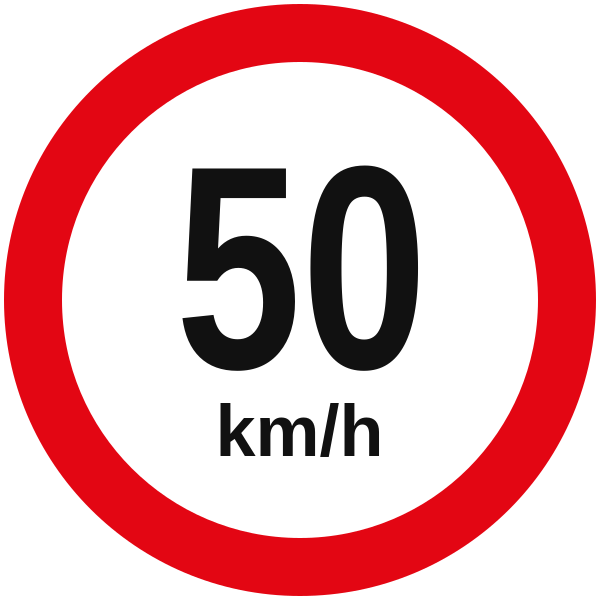
Speed limit signs are white circles with a red border, and the number is the maximum in kilometres per hour. The sign above means you must not go over 50 km/h. The limit stays in force until another speed sign tells you otherwise. Remember that a speed limit is a maximum, not a target: in fog, rain or heavy traffic the safe speed can be well below it. For the default limit on each type of road, and the 2025 changes, see the speed limits in Ireland.
No entry
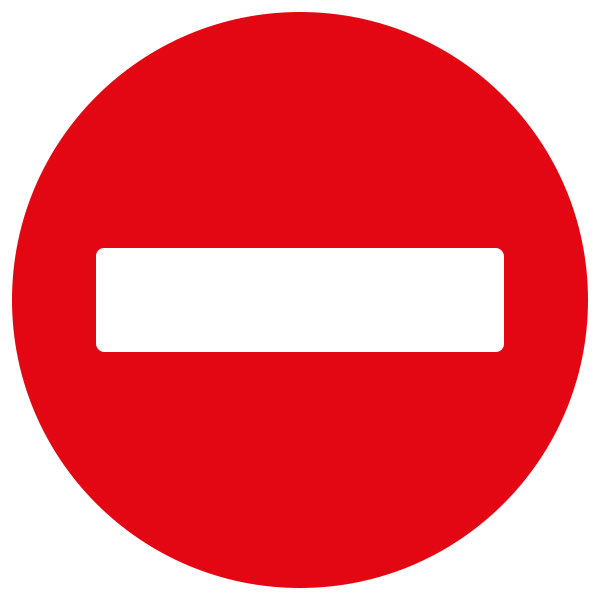
No entry to vehicles. A red circle with a white bar. Driving past it is a fixed charge offence (€60 plus a penalty point), so it's a pricey shortcut.
Blue circles: what you must do
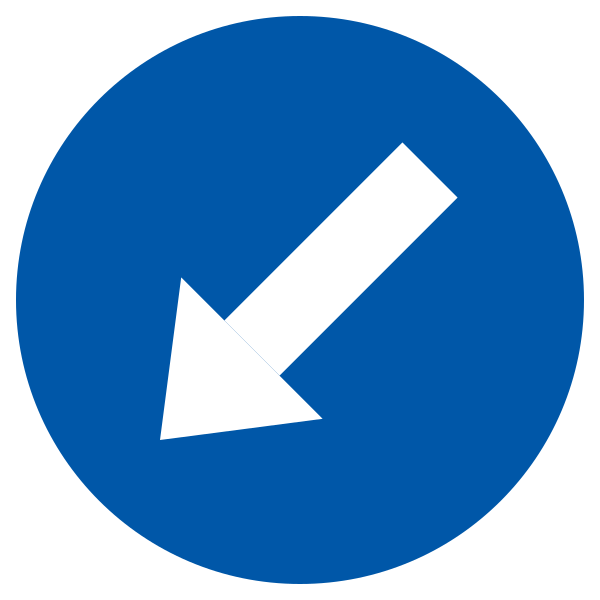
Keep left. Blue circles give positive instructions: keep left, turn left, go straight. If the sign is blue and round, the arrow is an order, not a suggestion.
Information signs: blue, green or white
Information signs tell you where you're going and how far it is. Their colour tells you what kind of road the sign belongs to. A green sign means a national road (N roads, such as the N7), a white one means a regional (R) or local road, and blue means a motorway. Direction signs in most of the country show place names in both Irish and English, with the Irish name usually in italics. Out in the Gaeltacht, you may only see the Irish name, so it helps to know that An Daingean is Dingle before you need to.
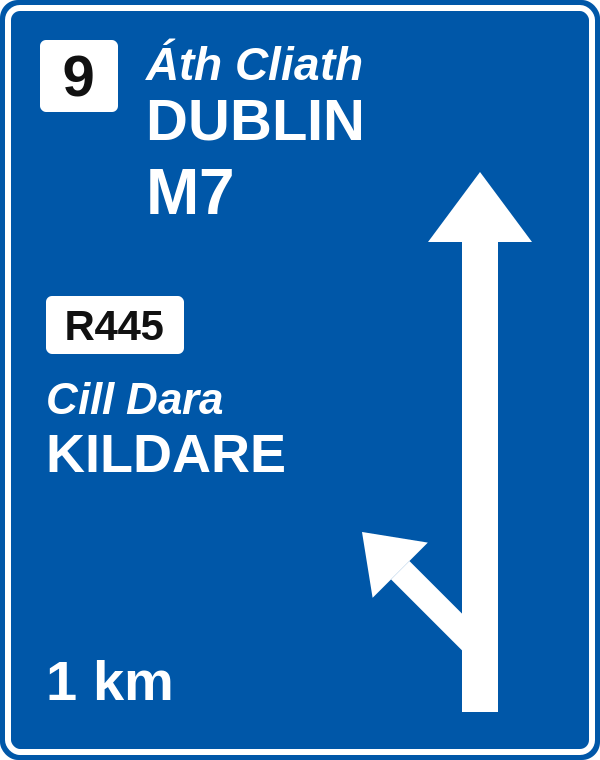
This blue sign is a typical motorway direction sign. All motorway signs are blue. One thing for learners to note: you're not allowed on a motorway at all until you've passed your test, so these signs are for spotting the turn you mustn't take for now.
Signs at a glance
| Family | Shape | Colours | What it means |
|---|---|---|---|
| Warning | Diamond (sometimes rectangle) | Yellow with black border and symbol | Hazard ahead, take care |
| Roadworks | Diamond or rectangle | Orange with black border | Roadworks ahead, slow down |
| Stop | Octagon | Red with white border | Stop completely |
| Yield | Downward triangle | White with red border | Give way to the major road |
| Regulatory (prohibition or limit) | Mostly circular | White with red border | You must not / maximum |
| Regulatory (mandatory) | Circle | Blue with white symbol | You must |
| Information | Rectangle | Blue (motorway), green (national), white (regional and local) | Directions and distances |
How do road signs come up in the theory test?
Signs are one of the easiest areas to gain marks in the Driver Theory Test, and one of the easiest to lose them, because several signs look alike at a glance. The test checks whether you know what a sign means and what you should do about it. If you're working through the theory, our guide to how the driver theory test works explains the format and the pass mark.
Learn every sign before the test
Drivingo DTT Ireland lets you practise road signs alongside every other theory topic, with mock tests against the 35-out-of-40 pass mark and explanations that tell you why an answer is right. Download Drivingo DTT Ireland and get to know your diamonds from your octagons.
Written by Drivingo in our own words. Based on Rules of the Road (Revision No. 9: May 2026), Road Safety Authority (RSA), www.rsa.ie.